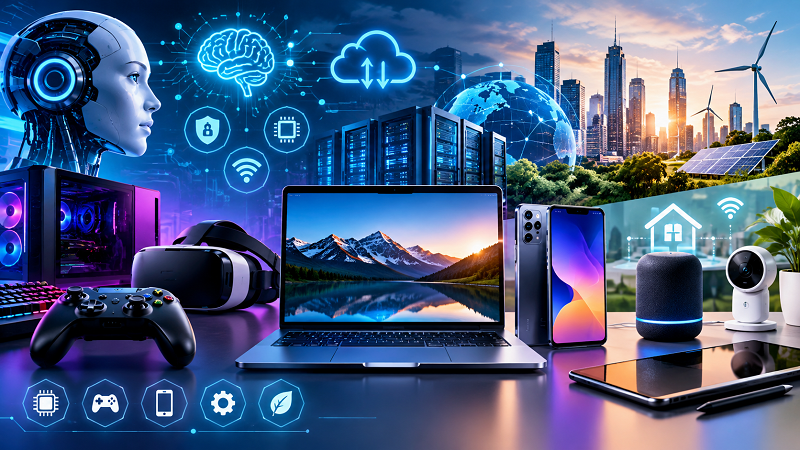
Technology is changing faster than ever. From artificial intelligence and cloud computing to smart devices, cybersecurity, gaming, and automation, new technologies are transforming the way people work, communicate, learn, shop, and entertain themselves. Keeping up with these changes can be challenging because new products, software, platforms, and innovations appear almost every day.
Tech Trends PBoxComputers provides a useful way for technology enthusiasts, gamers, professionals, and everyday users to understand the most important developments shaping the digital world. By following major technology trends, readers can learn how new innovations work, why they matter, and how they may influence the future.
This complete guide explores the major technology trends that are currently shaping the industry and explains what users should know about each one.
What Are Technology Trends?
Technology trends are emerging developments, innovations, and changes that influence how technology is created and used. A trend can involve new hardware, software, online services, business solutions, or changes in how people interact with digital products.
Some technology trends become widely adopted and remain important for many years, while others disappear after a short period. Understanding the difference is important for businesses and consumers because investing time or money in a technology requires careful consideration.
Modern technology trends are often connected. For example, artificial intelligence can work with cloud computing, automation, big data, cybersecurity, and smart devices. These technologies can combine to create more powerful digital solutions.
1. Artificial Intelligence Is Transforming Technology
Artificial intelligence, commonly known as AI, is one of the most important technology developments of the modern era. AI allows software and computer systems to perform tasks that traditionally require human intelligence.
These tasks can include understanding language, recognizing images, analyzing information, generating content, making predictions, and assisting users with complex activities.
AI is increasingly being used in customer service, healthcare, education, finance, marketing, software development, cybersecurity, and entertainment.
Generative AI is another major development. It can create text, images, audio, video, and software code based on user instructions. As these systems become more capable, businesses and individuals are finding new ways to use them for productivity and creativity.
However, AI also creates challenges. Users need to consider privacy, accuracy, copyright, security, and the possibility of incorrect information. Human review remains important when AI-generated information is used for important decisions.
2. Cloud Computing Continues to Grow
Cloud computing has changed the way people and businesses store information and use software. Instead of relying entirely on local computers and physical servers, users can access computing resources through internet-based services.
Cloud technology supports online storage, software applications, databases, website hosting, backup systems, artificial intelligence, and business platforms.
One major advantage of cloud computing is flexibility. Businesses can increase or reduce computing resources according to their needs without purchasing large amounts of physical hardware.
Cloud services can also make collaboration easier. Teams in different locations can work with shared documents, applications, and data.
Despite these advantages, cloud users should pay attention to account security, data privacy, service reliability, and access controls.
3. Cybersecurity Is Becoming More Important
As more personal and business activities move online, cybersecurity has become a critical part of modern technology.
Cyber threats can include phishing attacks, malware, ransomware, stolen passwords, fraudulent websites, and unauthorized access to accounts. Attackers are also developing more sophisticated techniques, which means users need strong security practices.
Basic cybersecurity measures include using unique passwords, enabling multi-factor authentication, keeping software updated, avoiding suspicious links, and regularly backing up important data.
Businesses should also establish security policies and educate employees about common online threats.
The future of cybersecurity will increasingly involve artificial intelligence, automated monitoring, identity protection, encryption, and advanced threat detection.
4. Smart Devices and the Internet of Things
The Internet of Things, or IoT, connects physical devices to networks so they can collect, exchange, or respond to information.
Examples include smart watches, connected cameras, smart speakers, home security systems, thermostats, vehicles, and industrial equipment.
Smart devices can make everyday activities more convenient. For example, users can monitor home security remotely, control compatible appliances, or track health and fitness information through connected devices.
Businesses are also using IoT technology to monitor machinery, manage inventory, improve logistics, and collect operational data.
However, connected devices can create security and privacy concerns. Consumers should choose reputable products, update device software, use strong passwords, and review privacy settings.
5. Gaming Technology Is Evolving
Gaming remains one of the most dynamic areas of the technology industry. Modern games are benefiting from improved graphics hardware, faster processors, artificial intelligence, cloud infrastructure, and advanced networking.
Gaming platforms continue to introduce better visual quality, faster loading, realistic environments, and more interactive experiences.
Cloud gaming is another development that could change how games are accessed. Instead of requiring powerful local hardware to run every game, cloud-based services can process some of the workload remotely and stream gameplay to compatible devices.
PC gaming is also evolving through better hardware, operating system support, game optimization, and community-developed software.
For gamers, keeping up with hardware requirements, software updates, security patches, and platform developments can help them get the most from their gaming systems.
6. Mobile Technology Keeps Advancing
Smartphones have become essential digital tools for billions of people. Manufacturers continue to improve processors, displays, cameras, batteries, connectivity, and software.
Modern smartphones can perform tasks that once required separate computers and specialized devices.
Mobile applications are also becoming more intelligent through AI-powered features, personalization, voice assistants, photography tools, and automated services.
Connectivity is another important area. Faster mobile networks can support high-quality streaming, online gaming, video communication, and connected devices.
Consumers should consider performance, software support, security updates, battery life, camera quality, and long-term reliability when choosing a smartphone.
7. Extended Reality and Immersive Experiences
Virtual reality (VR), augmented reality (AR), and mixed reality (MR) are creating new ways for people to interact with digital information.
Virtual reality can place users inside computer-generated environments, while augmented reality adds digital information to the physical world.
These technologies have applications beyond entertainment. They can be used for training, education, design, engineering, healthcare, retail, and professional visualization.
As hardware becomes more comfortable and software becomes more sophisticated, immersive technologies may become increasingly useful for both consumers and businesses.
8. Automation Is Changing the Workplace
Automation allows software and machines to perform repetitive tasks with limited human intervention.
Businesses use automation for customer support, data processing, manufacturing, marketing, logistics, financial operations, and other processes.
The combination of AI and automation is especially significant because intelligent systems can analyze information and perform increasingly complex tasks.
Automation does not necessarily mean eliminating every human role. In many situations, it allows employees to spend more time on creative, strategic, and interpersonal work while software handles repetitive processes.
Workers can prepare for this shift by developing digital skills, learning new tools, and focusing on abilities that complement emerging technologies.
9. Sustainable Technology Is Gaining Attention
Environmental concerns are influencing the development of new technologies. Companies are increasingly looking for ways to reduce energy consumption, electronic waste, and the environmental impact of manufacturing.
Energy-efficient processors, renewable-energy infrastructure, improved battery technology, electric vehicles, and more efficient data centers are examples of technology developments connected to sustainability.
Consumers can contribute by extending the life of their devices, repairing products when practical, recycling electronic waste responsibly, and choosing energy-efficient equipment.
Sustainable technology is likely to remain an important consideration as digital infrastructure continues to expand.
10. Data Is Driving Digital Innovation
Data has become one of the most valuable resources in the technology industry. Organizations collect information from websites, applications, devices, customers, and business operations.
When properly analyzed, data can help organizations understand customer behavior, identify problems, predict demand, improve products, and make better decisions.
Big data analytics and AI can process large amounts of information much faster than traditional manual methods.
However, data collection also creates responsibility. Organizations need to protect sensitive information and use data responsibly. Users should understand what information applications and websites collect and how it may be used.
How to Keep Up With Technology Trends
Technology changes continuously, so trying to learn everything at once can become overwhelming. A better approach is to focus on the areas that are most relevant to your interests or career.
Start by following reliable technology publications and specialist websites. Read product announcements, technology guides, industry analysis, and practical tutorials.
It is also useful to experiment with new tools. Trying a new application, operating system feature, AI tool, or hardware platform can provide practical knowledge that cannot always be gained by reading alone.
Another useful strategy is to compare information from multiple sources. Technology news can sometimes contain exaggerated claims, marketing language, or incomplete information. Checking reliable sources can help you understand whether a new product or trend has genuine value.
For readers who want regular information about technology, Tech Trends PBoxComputers can serve as a useful reference point for discovering developments across technology, gaming, software, hardware, and digital innovation.
What Technology Trends Mean for Businesses
Technology trends are particularly important for businesses because new tools can affect productivity, customer expectations, competition, and operating costs.
Businesses should not adopt every new technology simply because it is popular. Instead, they should evaluate whether a technology solves a genuine problem or creates measurable value.
Before adopting a new solution, organizations should consider cost, security, compatibility, employee training, scalability, and long-term support.
For example, AI may improve productivity in some departments, while cloud computing may reduce infrastructure requirements. Automation can streamline repetitive processes, while cybersecurity investments can reduce the risk of costly incidents.
A thoughtful technology strategy helps businesses benefit from innovation without taking unnecessary risks.
What Consumers Should Consider
Consumers should also evaluate technology carefully. New products often come with impressive specifications, but the newest device is not always the best choice for every user.
Before purchasing technology, consider your actual requirements. Think about performance, reliability, software support, compatibility, security, warranty coverage, and total cost.
For online services and applications, privacy should also be considered. Review permissions and understand what information a service requires.
Technology should solve problems and improve your digital experience rather than create unnecessary complexity.
The Future of Technology
The future of technology will likely involve greater integration between AI, cloud computing, connected devices, automation, cybersecurity, and advanced computing.
Technology will continue to become more personalized and capable. Devices may become better at understanding user needs, while software will increasingly automate routine activities.
At the same time, important questions about privacy, security, ethics, digital access, and responsible innovation will continue to shape the industry.
The most successful technologies will not simply be powerful. They will need to be useful, secure, accessible, and designed around real-world needs.
Final Thoughts
Technology is transforming nearly every aspect of modern life. Artificial intelligence, cloud computing, cybersecurity, gaming, mobile devices, automation, IoT, immersive technology, and sustainable innovation are among the major developments shaping the digital future.
Understanding these trends can help consumers make better purchasing decisions, help professionals develop valuable skills, and help businesses identify new opportunities.
The key is not to follow every trend blindly. Instead, focus on understanding how each technology works, what problem it solves, what limitations it has, and whether it provides genuine value.
By staying informed and learning continuously, readers can better prepare for the next generation of digital innovation. Tech Trends PBoxComputers aims to make that process easier by bringing technology and gaming information together in a clear and accessible format.